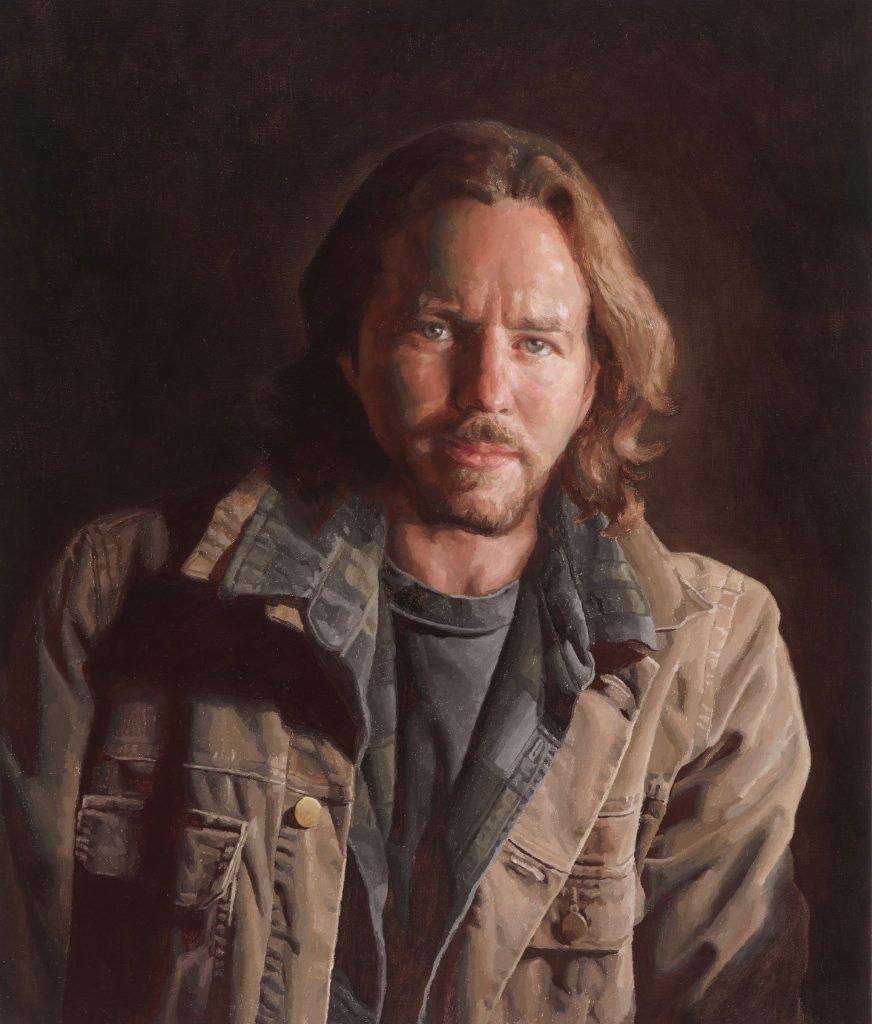
Anne Herrero

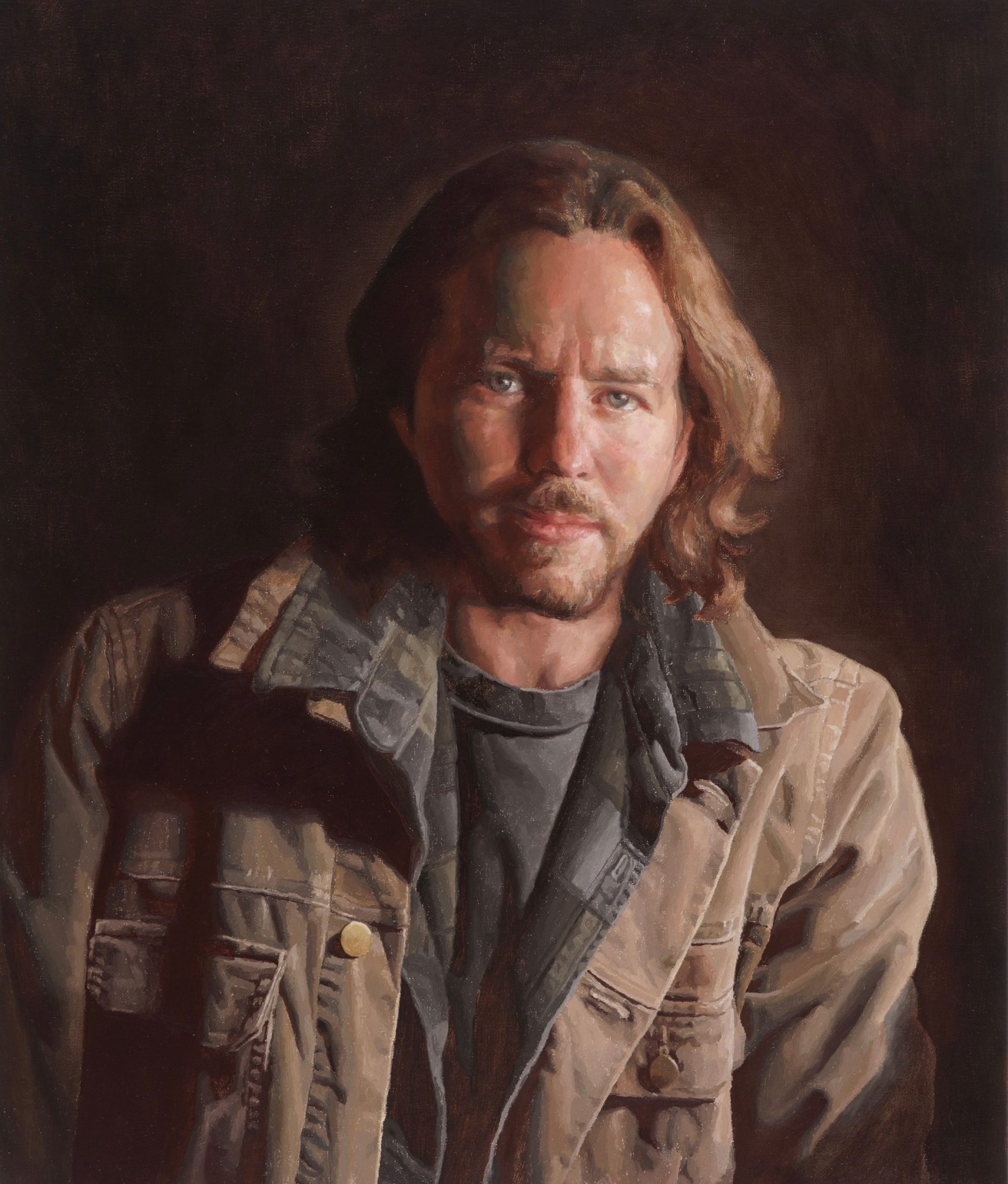
“Eddie” 2026
Oil on linen,
51 x 43 cm, 20 x 17 in

ANNE HERRERO

Born 1984, Berkeley, CA
Lives and works in Kansas City, MO and New York

“My work is centered around the figure. I pull content from a variety of sources to combine pop culture references and scenes from contemporary life with a classically driven technique. My paintings use a Baroque sensibility to depict images based on song lyrics. My drawings explore the narrative structure of diptychs by juxtaposing portraits with spaces that are tributes to Americana. Much of my work shares a fascination with the natural world and our relationship to environment. In some cases the landscape is a respite; in others, a threat.”

– Anne Herrero, 2021

Jed Webster Smith

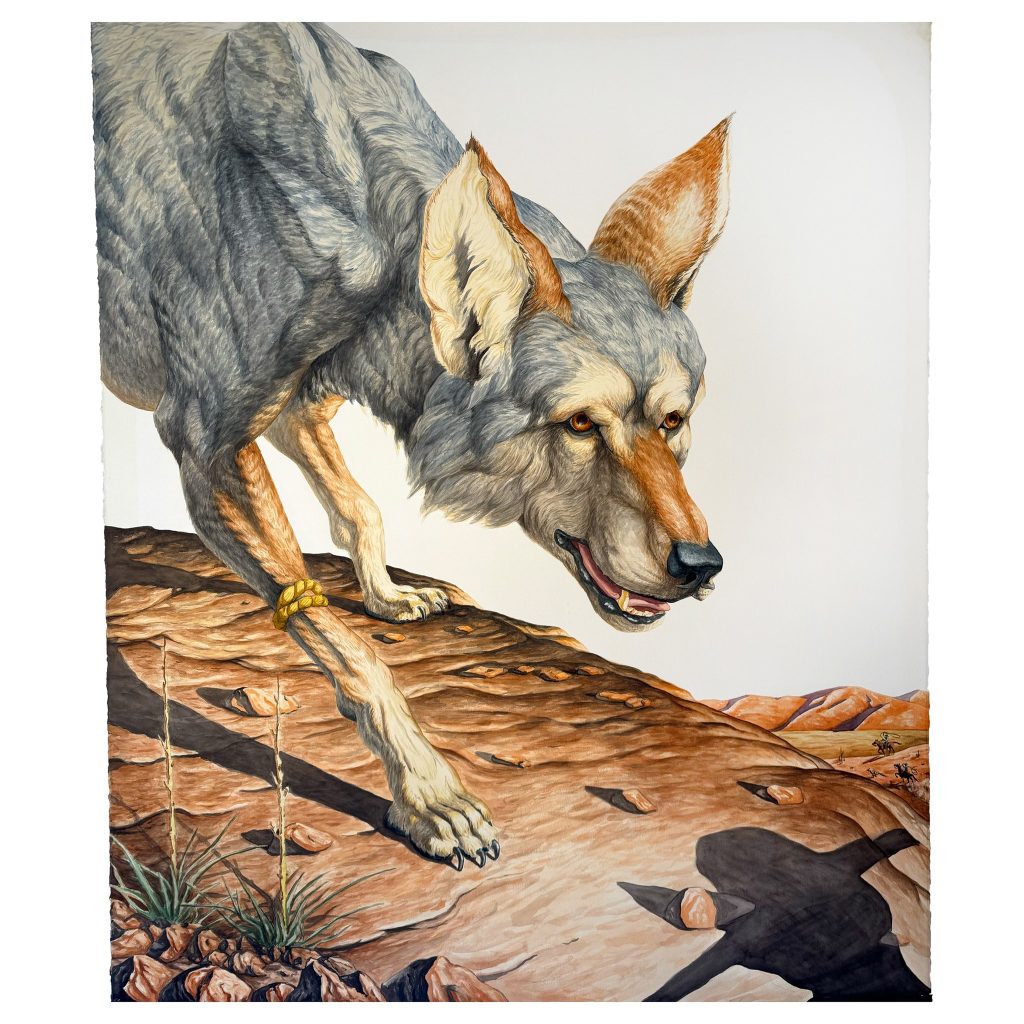
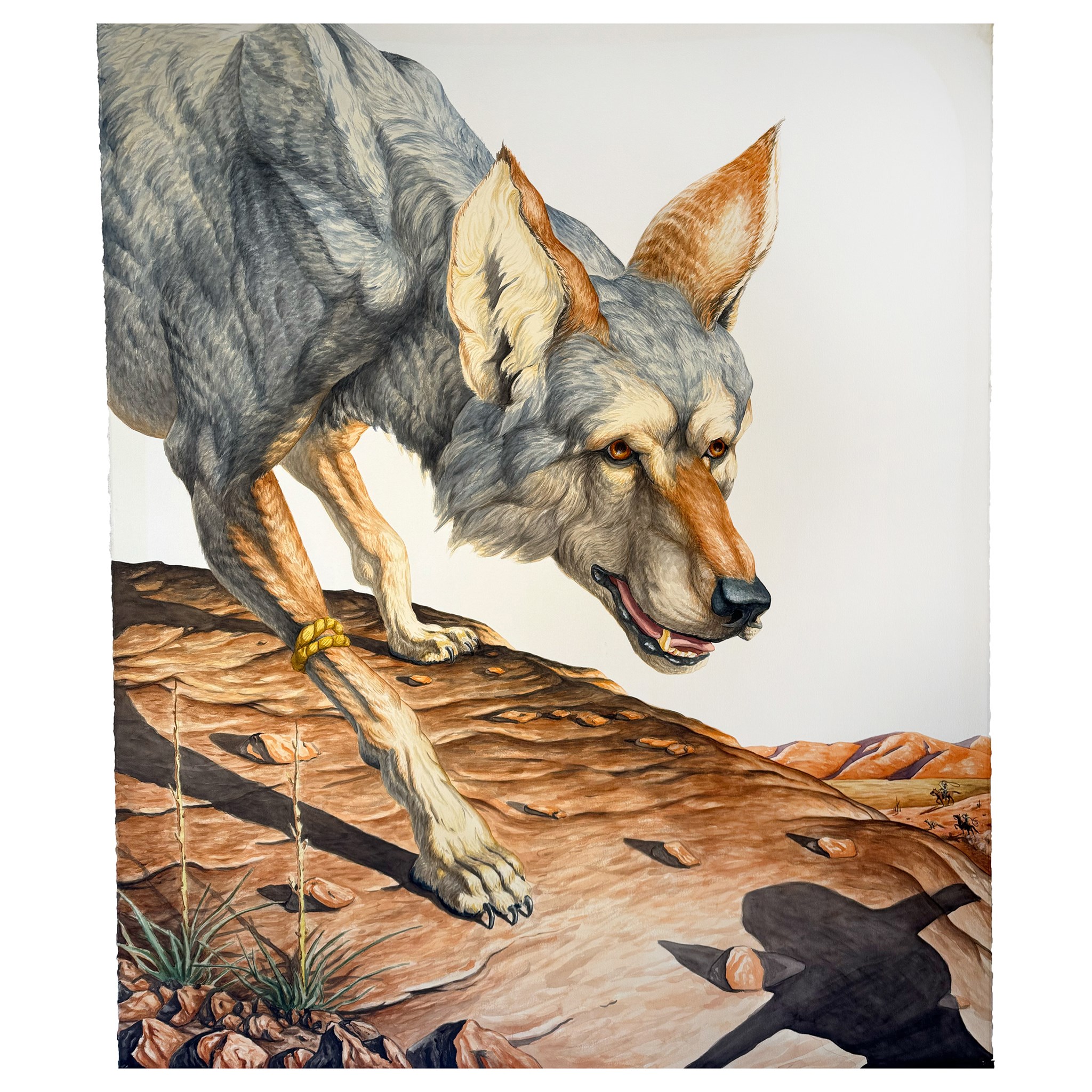
“La Incursio´n de los Lobos del Sauces” 2026
Watercolor on paper mounted to canvas
138 x 114 cm, 54 x 45 in

JED WEBSTER SMITH

Born 1992, Golden, Colorado (US)
Lives and works in New York

“The American West and its mythic characters have repeatedly been used to express national ideals. I am interested in using the past, specifically that of the West, to expose my perspective of the present and to challenge the myths that exist. Within my own body of work I examine contemporary issues through the use of historical narratives, Western archetypes, and our perception of the past. The genre provides an identifiable image that is uniquely connected to the American experience. I use the visual language of the West to explore current topics of American life in context with the distorted realities of our past.

Like the Westerns I grew up with, my own work is camouflaged in a vail of nostalgia. The figures in my work are often portrayed against a stark background. This forces the viewer to recognize the myth before the critique exposes itself. I work from observation and my imagination using watercolor and traditional printmaking methods. The figurative images I create are heavily researched. By using the West, a subject that I am both familiar with and continue to question, I aim to engage with our inherent perceptions of the past and the myths embedded within.”

– Jed Webster Smith

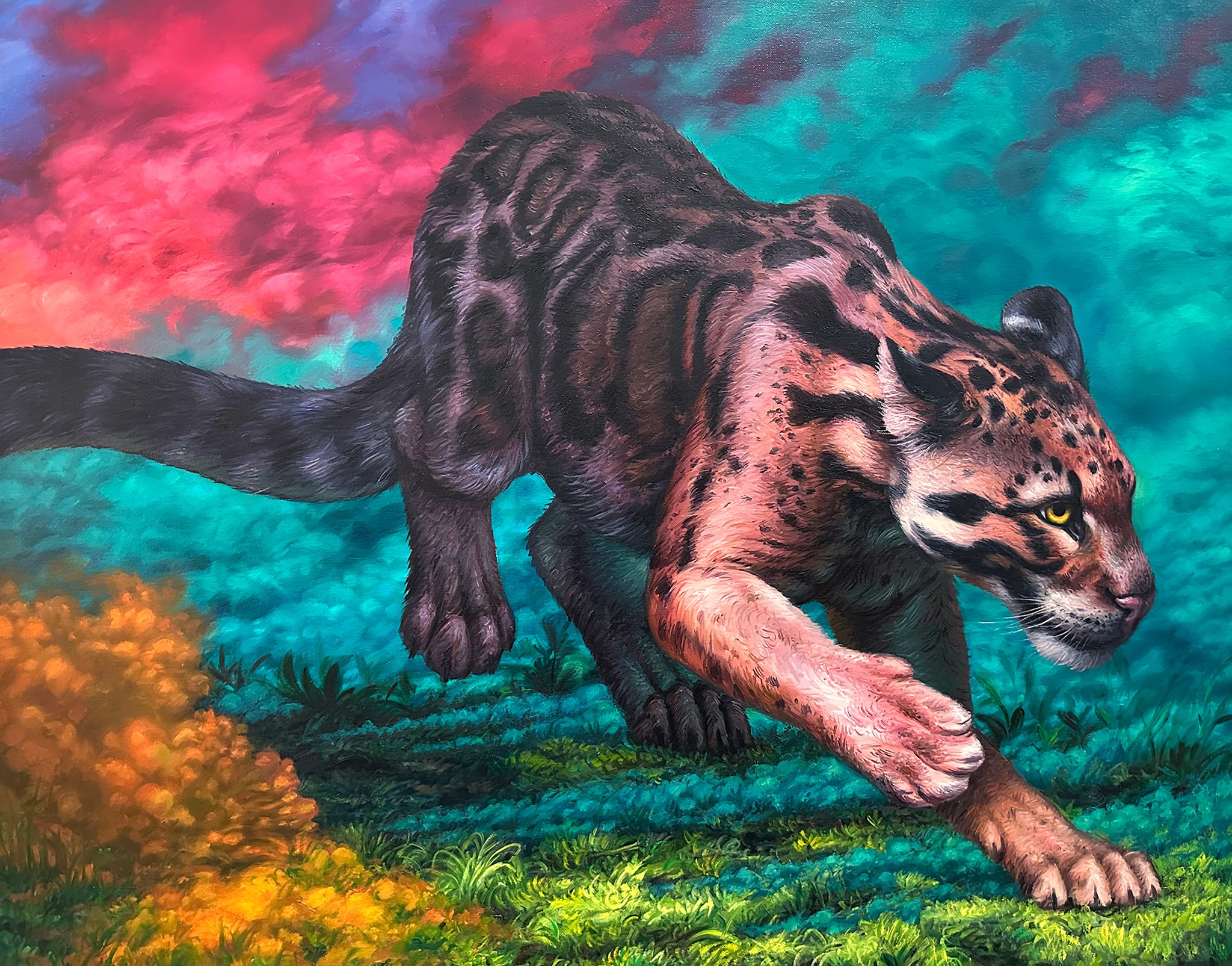
Angela Gram

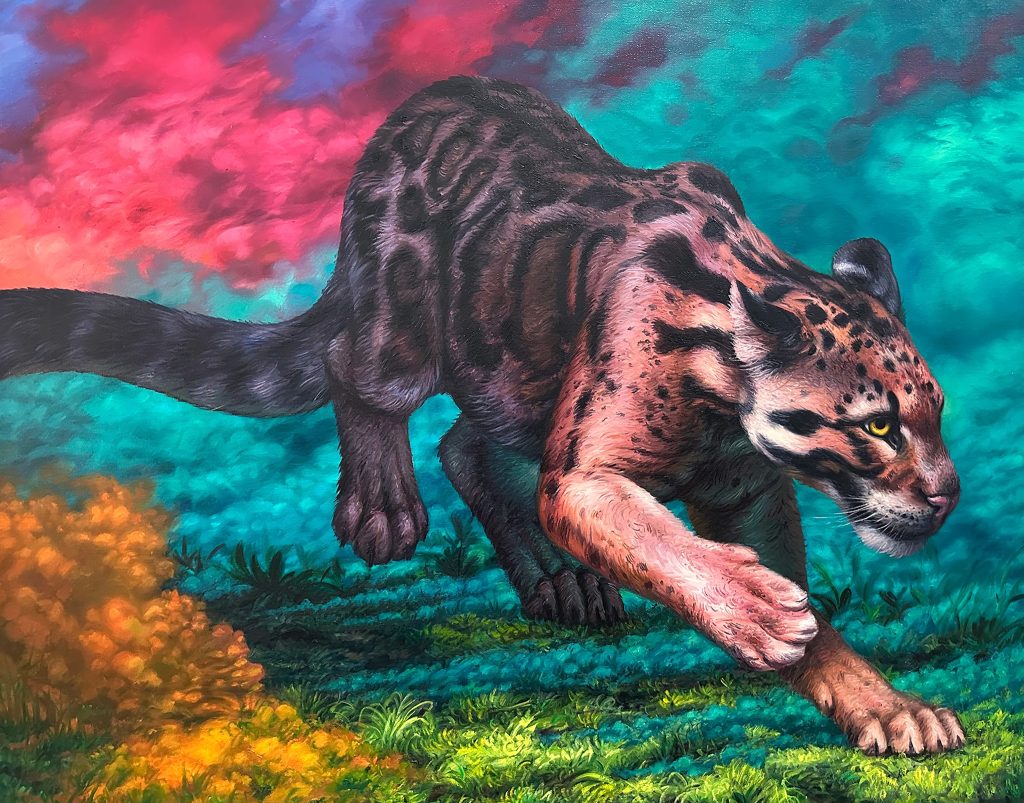
”Clouded Leopard” 2026,
Oil on linen,
76 x 97 cm, 30 x 38 in

ANGELA GRAM

Born 1985, Boston, Massachusetts
Lives and works in Jersey City, NJ

“In a technological age of impersonal and disconnected relationships between individuals there persists a sensibility in contemporary art that stresses the interdependence of living beings (both human and non-human) through the visual use of anthropomorphism, allegory, and surrealist interpretations of the natural world. While the complex physical reality of nature presents itself as mostly a myth in modern life, contemporary artists depicting nature defiantly elevate this topic to one of vital cultural importance. It is one of the most primordial dialogues in human history, where visual depictions of the natural world and animals within it are symbolically intertwined with humanity and seen in ways that define and redefine our values and identities throughout time.

My paintings collectively examine the current state of this relationship where the realm of the mind distorts, allegorizes, and projects onto the subject of animals in various ways. I embrace a larger environmental dialogue where inspiration is drawn from current events that display an irreconcilable tension between technology and the natural world. The animals of these paintings will also convey a deep uncanniness where their rich symbolism throughout art history collides with contemporary cultural discourses in a world where animal forms narrate human behavior. Rubens and Stubbs are major influences, and the aforementioned concept will be further explored in a new series of works. I believe inherent in the animal image is cultural symbolism and psychological depth potentially so powerful that it holds a complexity incomparable to representational figurative painting.”

-Angela Gram


John Jacobsmeyer

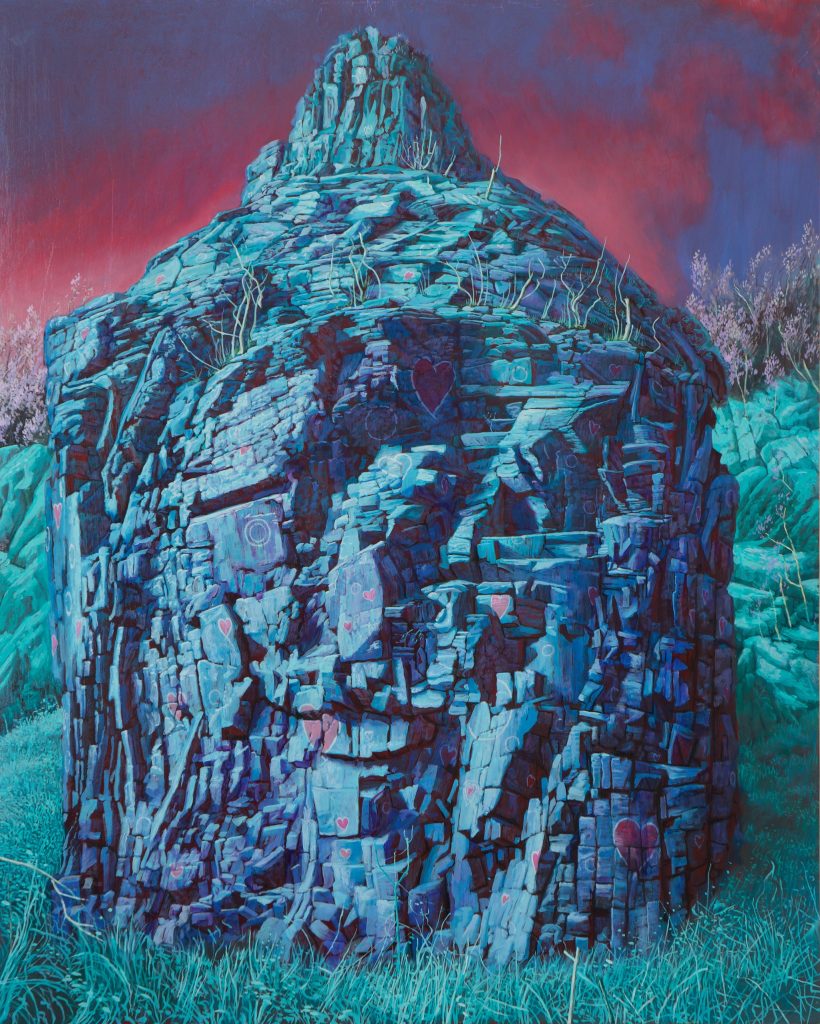
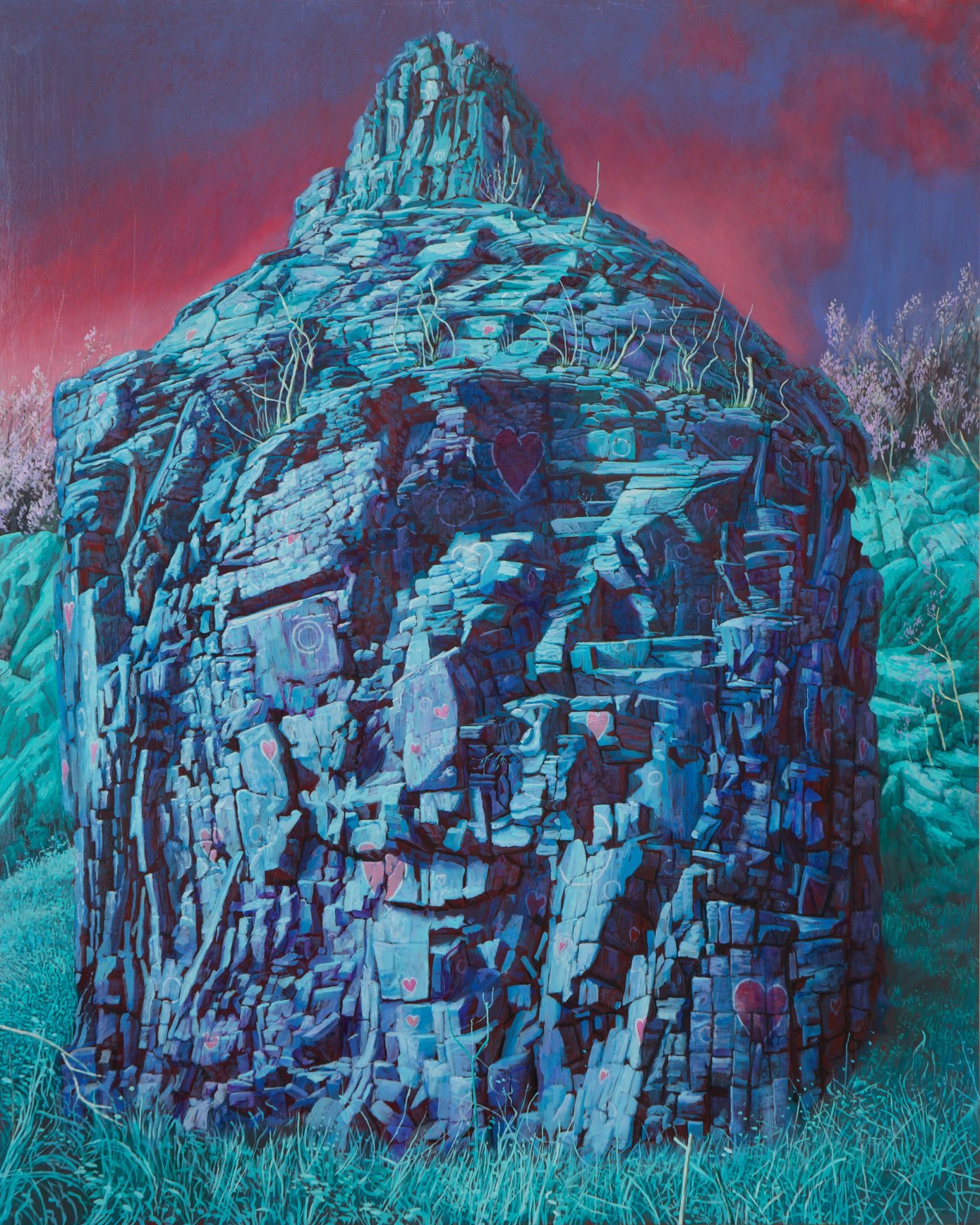
John Jacobsmeyer “Regicide Rock” 2026,
oil on panel,
76 x 61 cm, 30 x 24 in

JOHN JACOBSMEYER

Born 1964, Ann Arbor, Michigan
Lives and works in New York

John Jacobsmeyer (b. 1964, Ann Arbor, Michigan) is a painter and printmaker based in the New York area and a long-standing contributor to contemporary figurative discourse since around 2000. His work explores narrative, allegory, and the human figure through painting and printmaking, often extending into artist books and printed editions.

Jacobsmeyer received his BFA from the University of New Hampshire and his MFA in Painting and Printmaking from Yale University School of Art. He has held a range of teaching and leadership positions, including Head of Printmaking and faculty member at the New York Academy of Art’s Graduate School, where he teaches printmaking, painting, and art theory.

He has lectured and taught at more than 40 institutions internationally, including Rhode Island School of Design (RISD), Central Academy of Fine Arts in Beijing, Shanghai University, Vanderbilt University, and Pratt Institute.

His work has been included in residencies at the Ragdale Foundation, MacDowell Colony, Roswell Artist-in-Residence Program, Anchor Graphics, Cill Rialaig (Ireland), Shanghai University, and Mimar Sinan University in Istanbul.

Awards include fellowships and grants from the New Hampshire State Council on the Arts, the Basil Alkazzi Award, a Fulbright Fellowship (Italy), a Pollock-Krasner Grant, and a New York Foundation for the Arts Fellowship.

His work is held in public and private collections internationally, including the Victoria and Albert Museum in London, the Anderson Museum of Contemporary Art (New Mexico), the Springfield Museum of Art (Ohio), as well as collections held by the States of New Hampshire and South Carolina, and the cities of Seattle and Shanghai.

Recent exhibitions include solo presentations at Gallery Poulsen in Copenhagen and exhibitions in the United States, China, and Europe. He is represented by Gallery Poulsen (Copenhagen) and Art Labor Gallery (Shanghai).

 

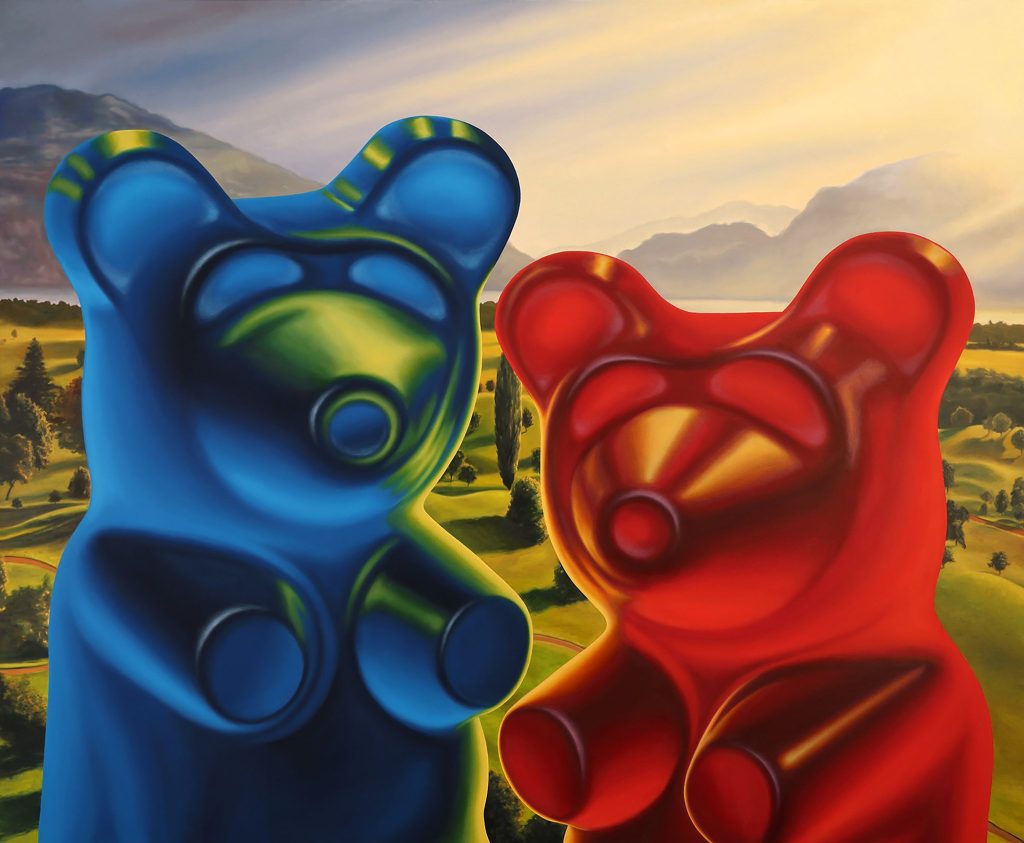
Landon Bailey Higgins

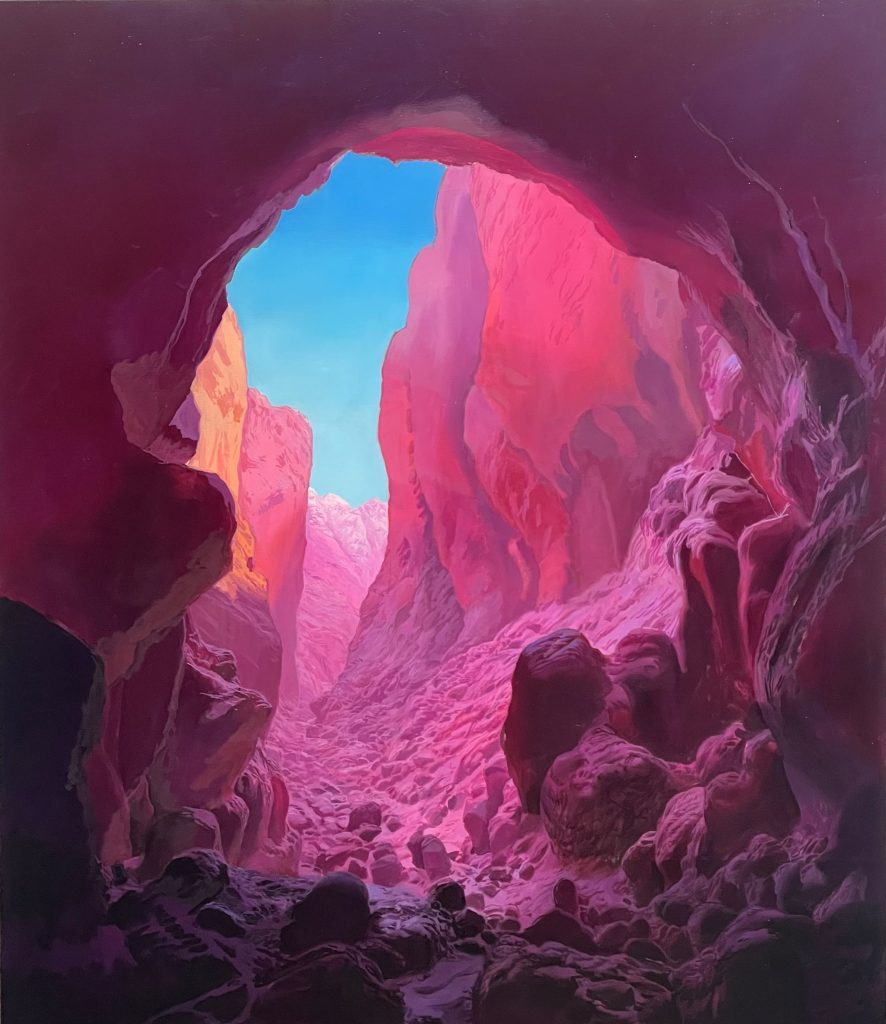
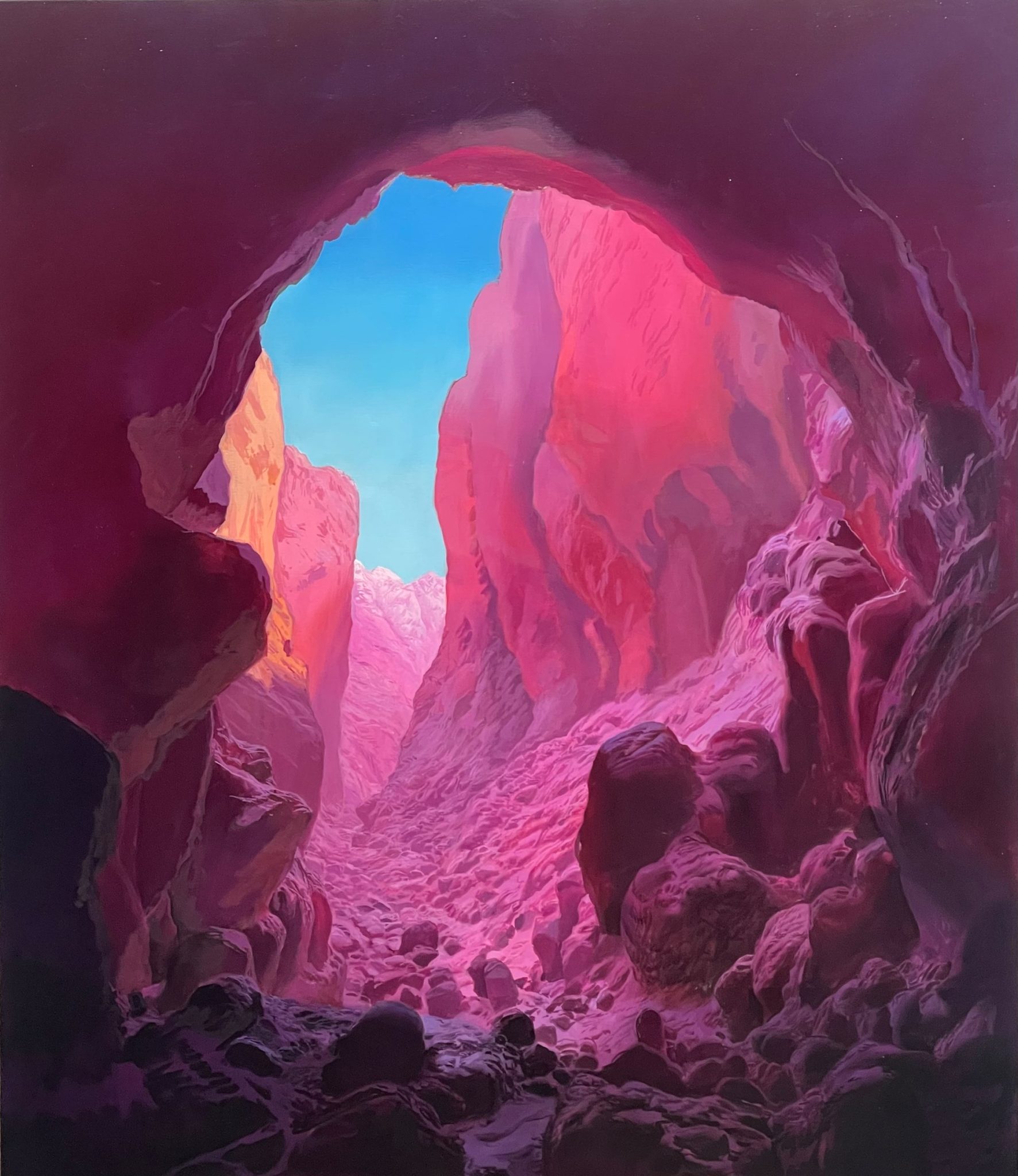
“Lover’s Valley” 2026,
oil on linen,
107 x 131 cm, 42 x 51.5 in

LANDON BAILEY HIGGINS

Born 1996, Huntsville, Alabama (US)
Lives and works in New York

Higgins is known for his vibrant paintings depicting luminous gummy bears. These paintings are characterized by smooth gradients of color and dramatic lighting. Though the narratives often tell of disconnection and longing, the paintings maintain a playful essence reminiscent of adolescence, pleasure, and innocence. In these whimsical yet tender narratives, the gummy bear functions as a vehicle for self-identification, exploration of light, and permeating scenes of isolation.

Stemming from growing up in a conservative, Christian culture, Higgins felt mired in the struggle to reconcile his homosexuality in an environment where acts of intimacy were reserved for others. As a result of this, the choice of the color of Higgins’s gummy bears is very specific. The red and blue characters symbolize heteronormative and gender-based colors assigned to men and women by societal structures, while the orange gummy bears symbolize “the other”, those who find themselves existing outside of the conventions of society. The portrayal of intimate acts between two characters, one red and one blue, while a singular golden figure peers in is Higgins’s way of illustrating his own longing for meaningful and romantic human connection. The gummy bear in Higgins’s paintings can also be interpreted as a pop-cultural icon and because of this, as an homage to New York, the birthplace of pop art and the city that made it possible for Higgins to live out his identity, free from prejudices.


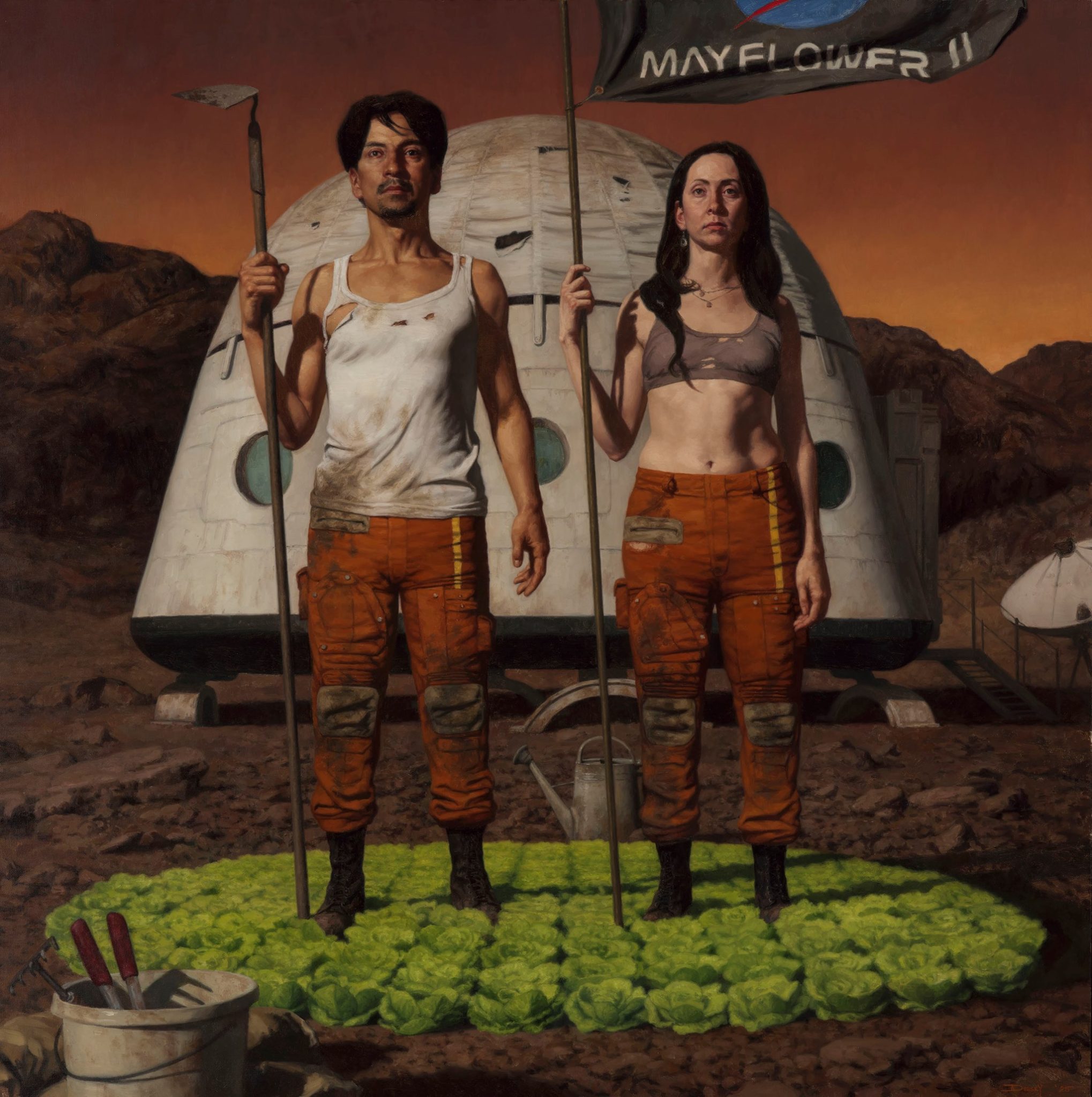
Carl Dobsky

“Re-entry – A New Garden”, 2025
Oil on linen
107 x 107 cm, 42 x 42 in

CARL DOBSKY

Born in Victoria, Texas
Lives and work in Los Angeles, California

Carl Dobsky is a figurative painter currently living and working in the Los Angeles area. His work is grounded in traditional forms of representation while still incorporating contemporary elements. Dobsky earned a B.F.A from Ringling College of Art and Design and an M.F.A from the New York Academy of Art. Beyond education at these institutions, he also studied classical approaches to drawing and painting at the Water Street Atelier in Brooklyn, NY. He has exhibited throughout the U.S. and in Europe. His work can be found in both private and public collections including the New Britain Museum of Art and the Seven Bridges Foundation.

Rainer Hosch

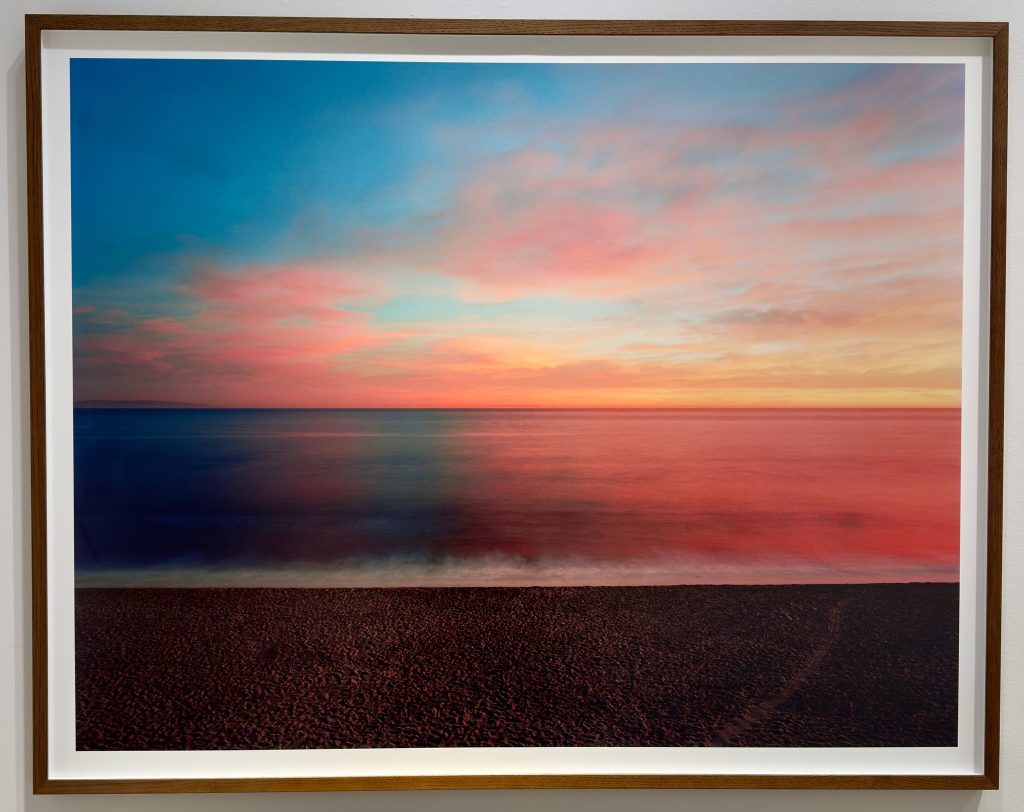
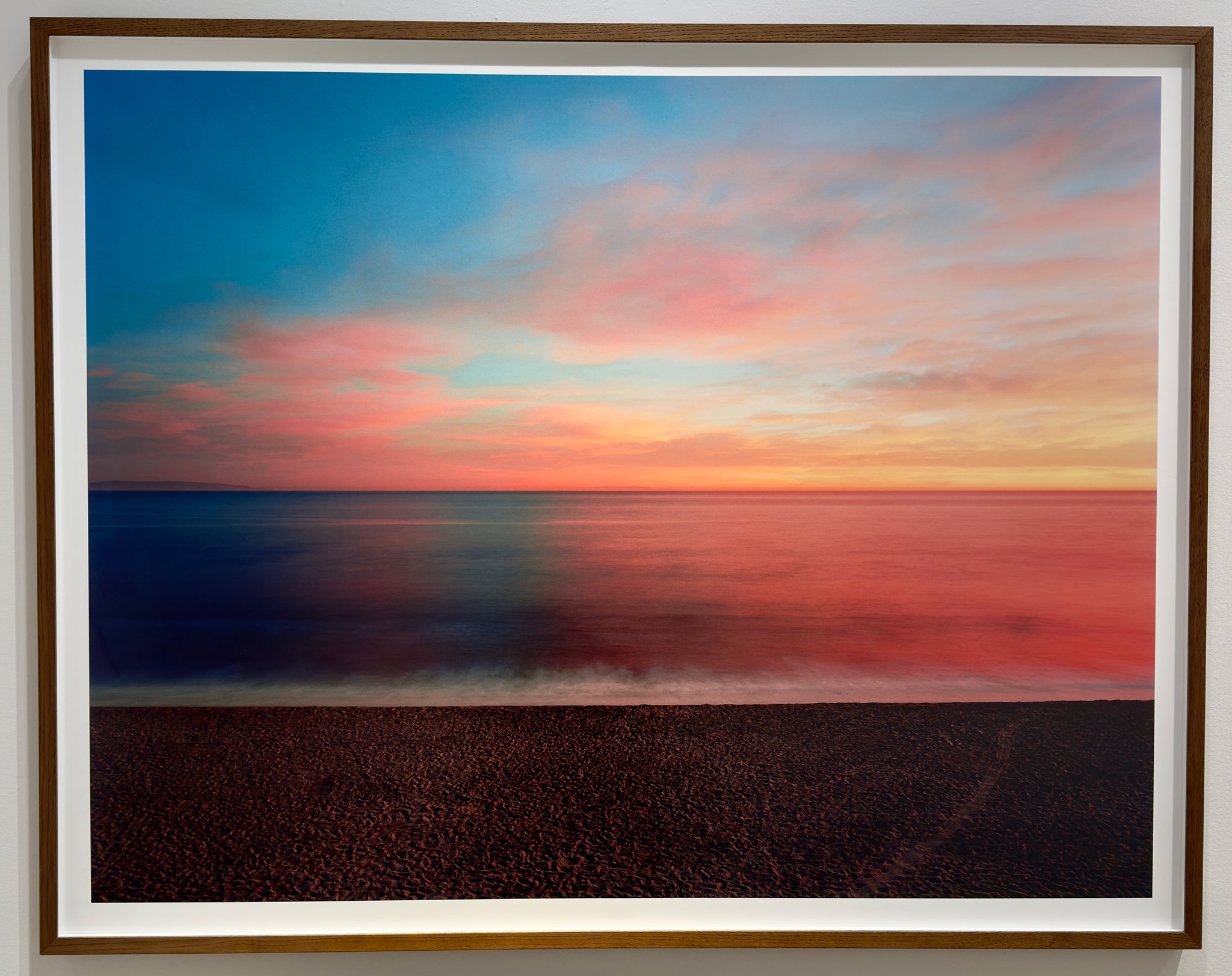
“Love” 2025
Archival Pigment Print, 109 x 190 cm, 43 x 55 in, Framed, 146 x 176 cm, 58 x 69 in
Edition of 7 + 2 AP

RAINER HOSCH

Born 1970, Vienna, Austria
Lives and works in Los Angeles

Rainer Hosch’s migration from Vienna to New York City and finally Los Angeles has informed the evolution of his photographic practice. In New York City, he focused on documenting the streets, observing urban spaces with raw edges and most importantly the people within. The exploration of street photography is rooted in his work as a portraitist.

Hosch’s second solo exhibition featured black and white portraits or more accurately mug shots of popular culture icons. When he arrived in Los Angeles, Hosch and his family moved to Topanga Canyon, removed from the dense urbanity of the city.

“The intersection of the Pacific Coast Highway and Topanga always felt like the final frontier in my mind, a place where America ends and a new horizon begins. My journey from Vienna to New York City and finally to Los Angeles led me incrementally closer to the beach. Over the past three years it has become my daily ritual to document the horizon. In contrast to the shifting environment of sand, ocean and sky, the camera remains still, a steady witness to the developing subject of Topanga Beach.”

The latest body of work examines a changing landscape while testing the intricacies of Large and Medium format film and meditates on the long journey west.

Taylor Schultek

Taylor Schultek ”Lights Out” 2025
Oil on Birch Panel
61 x 46, 24 x 18 in

TAYLOR SCHULTEK

Born 1990, St. Paul, Minnesota
Lives and works in New York

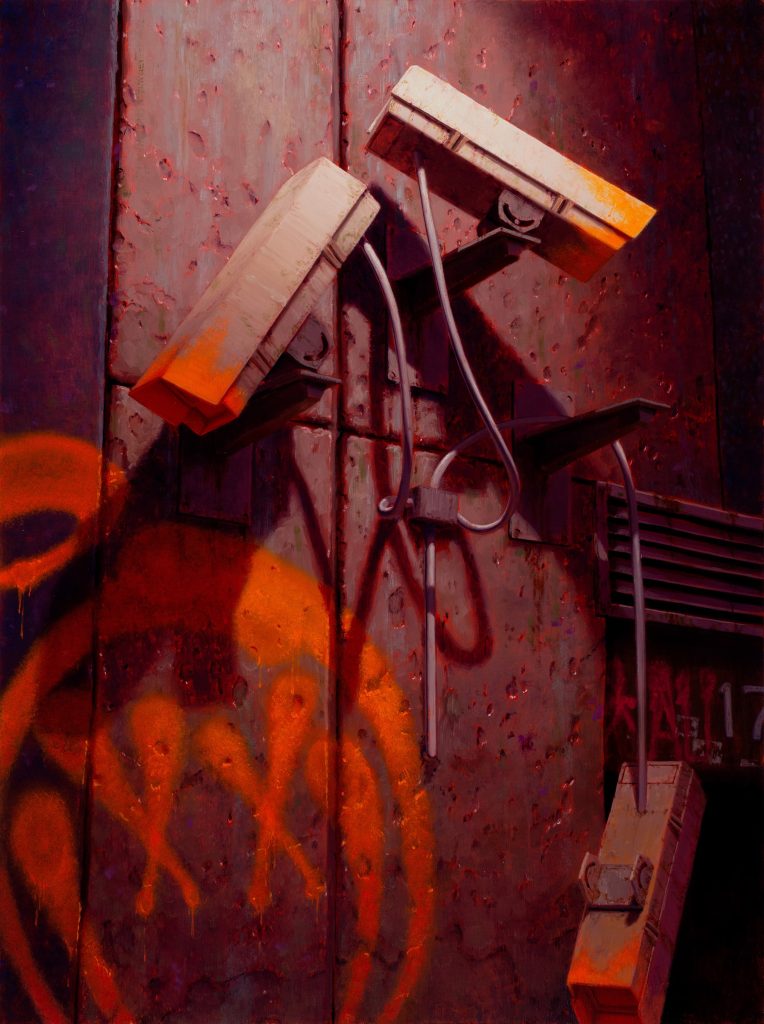
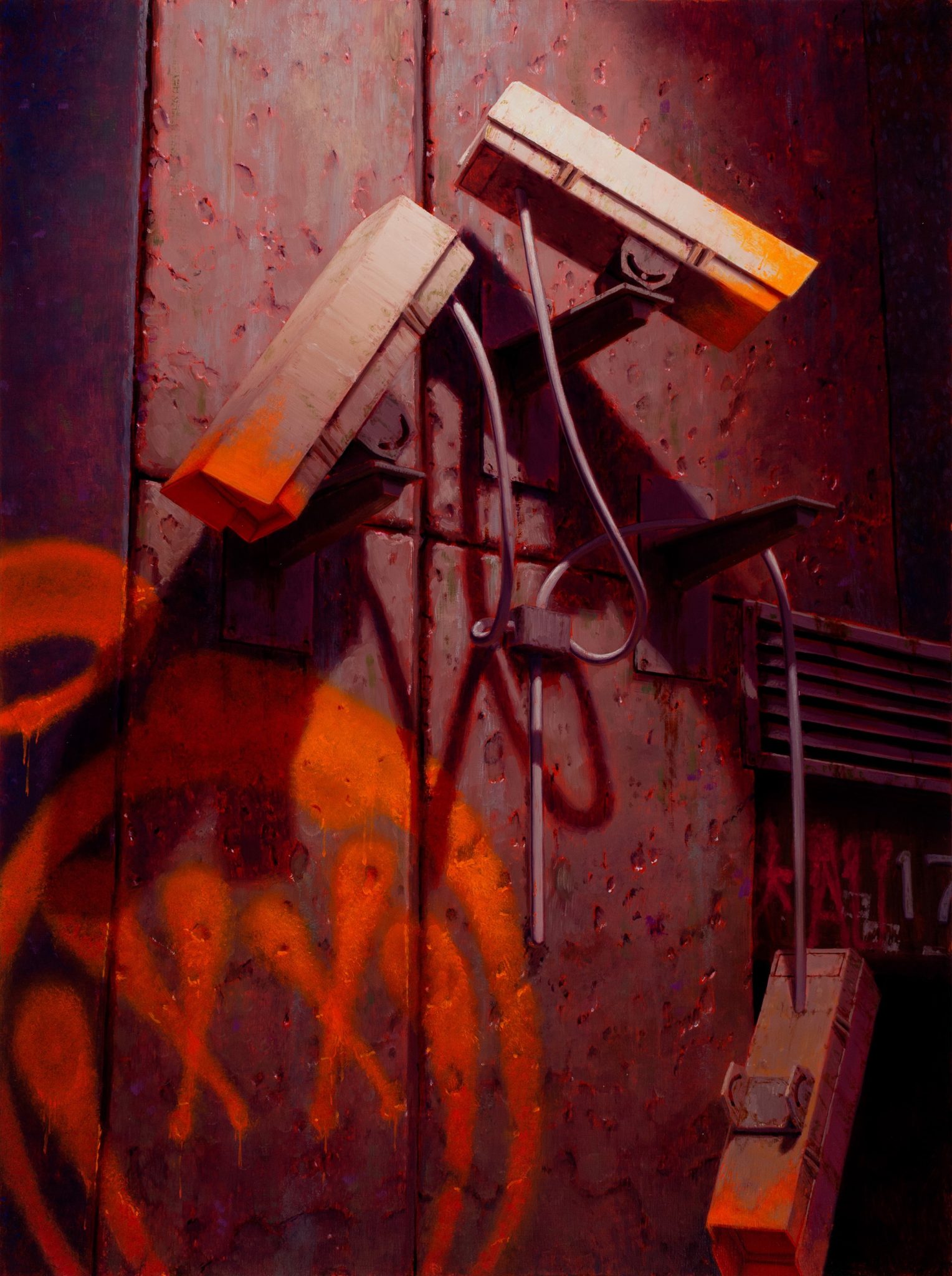
“I’m using my environment of NYC, memories, and digital spaces as a visual framework to discuss our present moment and to engage in complex and cumulative world-building. Finding ways to play with the city’s dehumanizing concrete grid and interstitial spaces has been a part of my artistic practice since I was a young kid writing graffiti. Now I use my experiences as ingredients to create new scenes and narratives, centered around a variety of topics from personal interests to societal anxieties, in much the same way as Hopper or Delacroix. However, my life experiences have taken place in both the real world and digital simulations, and after countless hours in virtual spaces, I’ve come to acknowledge that my visual vocabulary has roots in these aesthetics. Back alleys, underground tunnels, trains, rooftops, and virtual realities come together in my recent work to construct an autobiographical space that blurs the line between fiction and reality. Keeping that line blurry, and leaving the edges of the imagined world open, allows me to have a flexible and adaptive visual language that changes to fit different topics.

Though the places I paint may sometimes look like dystopian science fiction, I’m not aiming for that. They’re a means of appreciating and engaging with the present moment of the world around me, and to change my relationship with my surroundings. These days though, the world around me often looks dystopian and science fictional, in the sense that there is urban sprawl, civil unrest, hyper-connectivity, anti/authoritarian movements, fantasies of technological advancement, unprecedented class inequality, and an accelerating pace of entropy.”

-Taylor Schultek, 2022

Rebecca Orcutt

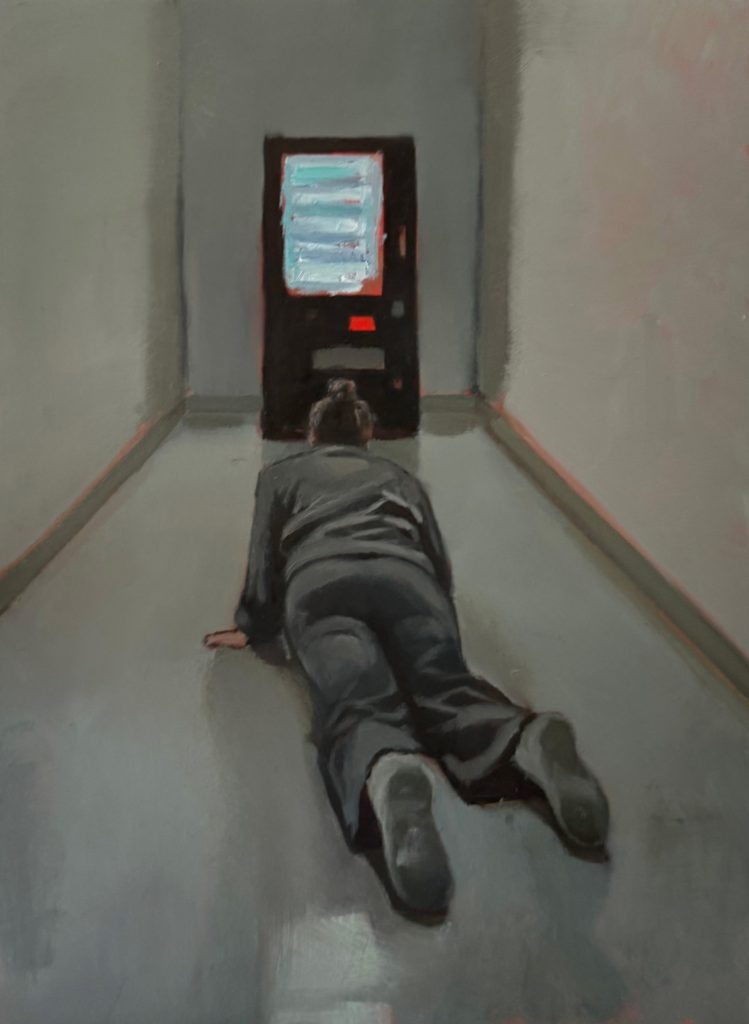
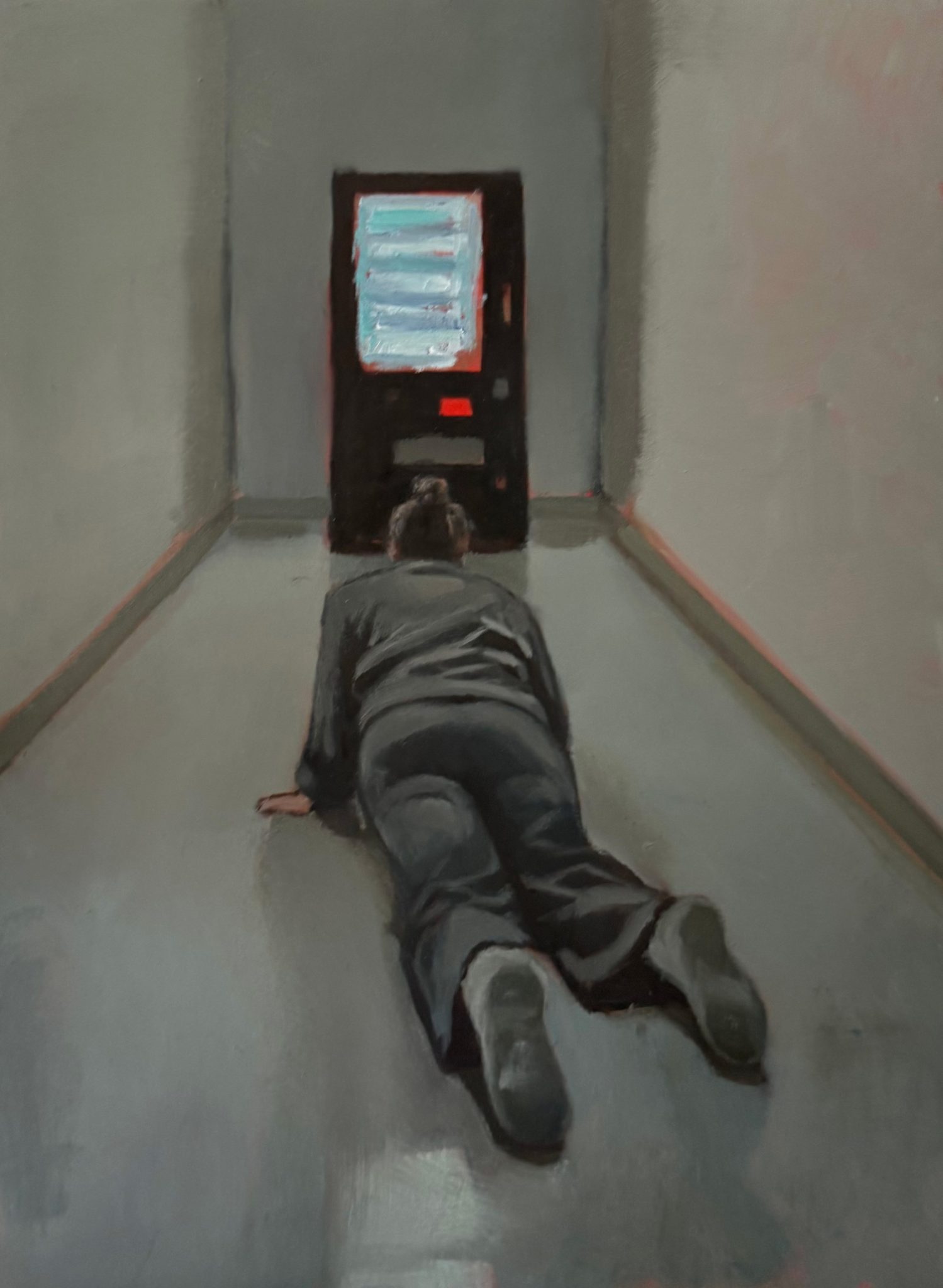
”Nowhere Else to Look”, 2025
Oil on panel
23 x 30 cm, 9 x 12 in

REBECCA ORCUTT

Born 1992, North Bend, WA
Lives and works in Seattle, WA

“Much of my work revolves around quiet moments, not clearly good or bad, the waiting in daily life. Everything mostly appears the same, but is different somehow.

In folklore, changes in behavior of a person might have meant they were a “changeling”, someone mythical fairies had replaced a real person with. Today it sounds strange, although there is also something comforting about a simple explanation for the inexplicable, inevitable ways people change.

How the same place can feel different than it used to, or a familiar person like a stranger.

Change is not always a big event, explicitly good or bad. Sometimes it’s in the mundane day to day, barely detectable. Somewhere in subtle shifts of emotion and a continually evolving perception of our surroundings and each other.”

Jean-Pierre Roy

“Untitled” Wip, 2026
oil on canvas,
114 × 94 cm. 45 X 37 in

JEAN-PIERRE ROY

Born 1974, Santa Monica, California
Lives and works in Brooklyn, New York

“My work is often associated with Science Fiction, and the Post-Apocalyptic. While the genre narratives, that create this continuity of ideas have had a huge impact on my visual memory, I have never really been that interested in the superficial signifiers of alien technology, space battles and blasted wastelands. For me, the pull of the fantastical has always been the promise of ‘When you enter through these doors, your existential understanding of the nature of things will be questioned.’ It is that promise, and the examination of it, that has been the unifying thread in all of my work.

I have always been obsessed with the reductive investigation of natural systems and their visual replication, not for purely mimetic ends, but from a deep fear that I could not have any predictable interaction within a given system without first knowing all the forces at work in it. Previous work often focused on sublime optical phenomena and massive cataclysmic events as they present situations where the viewer is placed into a moment, where the natural world has reorganized itself into a beautiful, terrifying and unfamiliar system of forces. For me, that Suspension of the Known pops the bubble of the ecology of the self and for a moment lets in the briefest glimpse of the inaccessible cosmos. That which lies between what we have seen, and what we know must be there, but can never reach. It is that inner need, the deep emotional desire to want to encounter the Beyond, while being set so solidly in an indifferent cosmos, that sets up conflict in the new work.

My work takes this lifelong conflict of wanting to know the system, while stuck in a body and mind wired for irrational discourse, and lets it play out against my earlier motifs, while building a new set of signs. The cataclysmic tearing open of the picture from my earlier works has been replaced with colossal figures playing out an autobiographical impulse while resisting the constraints of portraiture. Interwoven with non-spatiotemporal geometries and holographic projections, the painting’s signage serves as a fulcrum between the undeniable physicality of existence and our hardwired yearning for the immaterial.”

Jean-Pierre Roy, November 2014